Foolproof Workout Plans for Indecisive Beginners
Foolproof workout plans for indecisive beginners sound like a contradiction, because if you’re truly indecisive, even picking a plan feels overwhelming. I spent eight months researching fitness programs, bookmarking YouTube channels, downloading apps, and starting exactly nothing. The irony is brutal. The more options available, the harder starting becomes. Analysis paralysis is real, it’s common, and it has nothing to do with motivation. It has everything to do with having too many doors and no map.
Why Indecisive Beginners Quit Before They Start
The fitness industry makes indecision worse, not better. Every program promises it’s the best one. Every influencer swears their method is the only method that works. Meanwhile, you’re sitting on your couch with seventeen open browser tabs, a full water bottle, and zero completed workouts.
Decision fatigue is the actual enemy here. Research consistently shows that the more choices a person faces before taking action, the less likely they are to act at all. This is called the paradox of choice, and it hits hardest in areas where people already feel uncertain about their abilities. Fitness is one of those areas for most beginners.
The solution isn’t finding the perfect plan. The solution is making the decision once, committing to a specific structure for a set period, and refusing to second-guess it until that period ends. Six weeks minimum. No switching. No comparing to other programs. Just the one you chose, done consistently.

The Real Reason You Keep Switching Programs
Switching programs feels productive. It really does. You research a new routine, download a new app, maybe buy a new piece of equipment, and that burst of novelty mimics the feeling of progress. Then the novelty wears off around week two, and the next shiny program starts looking appealing.
This cycle is extremely common among beginners and it has a name in behavioral psychology: the “fresh start effect.” It’s why Mondays and January firsts feel so motivating. New beginnings feel like clean slates. The problem is that actual fitness results require sustained repetition, not fresh starts.
I broke this cycle by making one rule: no researching new workouts for six weeks after starting a program. No YouTube rabbit holes, no Reddit fitness threads, no comparing my current routine to anything else. Just the plan, executed. The boredom I felt around week three turned out to be the signal I was actually building consistency rather than just chasing excitement.
Foolproof Workout Plans for Indecisive Beginners: The Decision Framework
Here’s how to pick a plan and actually stick with it. Three questions. Answer them honestly, then stop deliberating.
The first question is: where will you actually work out? Not where you wish you’d work out. Where you realistically will. Home, gym, outdoors, these are your only real options. Pick one that requires the fewest obstacles between you and starting. Every extra step between you and the workout, driving to a gym, finding parking, packing a bag, is a potential exit ramp.
The second question is: how many days per week can you genuinely commit to, on your worst week, not your best week? Most people say five and manage two. Pick two or three and actually do it. Building a real habit on three days beats an abandoned five-day program every time.
The third question is: what kind of movement do you not hate? You don’t need to love it yet. You just need to not dread it. Strength training, walking, cycling, bodyweight circuits, yoga, pick the one that sounds least terrible and build from there.
Once you answer those three questions, you have your plan. Not a perfect plan. A plan. That distinction matters more than anything else in this article.
Also Read: No-Fail Fitness Routines for Single Parents Who Are Exhausted 2026
Starting With a 3-Day Full-Body Structure
Three days a week, full-body training is genuinely the best starting framework for indecisive beginners. It removes the complexity of split routines, requires no advanced scheduling, and still produces real results when done consistently over eight to twelve weeks.
Here’s the structure I used and still recommend:
- Monday: Strength circuit (squat, push-up, row, hinge, carry)
- Wednesday: Low-impact cardio, 25 to 30 minutes at a comfortable pace
- Friday: Strength circuit repeated, with minor progression
Each strength session takes 30 to 35 minutes. Each exercise gets three sets of 10 to 12 reps. Rest 60 to 90 seconds between sets. That’s the whole framework. No customization required until week seven.
The specific movements matter less than the consistency of showing up. Goblet squats, wall push-ups, resistance band rows, Romanian deadlifts with light dumbbells, any version of these patterns works. Apps like Nike Training Club and Fitbod give structured beginner sessions that follow this exact framework without requiring you to design anything yourself.
Removing Every Decision From Your Workout Day
The goal is to reduce the number of choices you make on the day of a workout to as close to zero as possible. Every decision is a drain, and for indecisive beginners, even small decisions like “which exercise should I start with” can derail a session before it begins.
Lay out your workout clothes the night before. Program your playlist in advance and use the same one every time. Write your exercises on a notecard or screenshot them so you’re not scrolling through an app mid-session. Set your equipment out before you start. These micro-preparations sound fussy but they completely remove the friction points that kill momentum.
FYI, I keep a laminated card with my workout written on it stuck to the wall above my mat. I made it once, four months ago. I haven’t had to think about what to do when I step onto that mat since. That’s the goal.

How Long to Stick With One Plan Before Changing It
Six weeks is the absolute minimum before evaluating whether a program is working. Eight to twelve weeks is ideal. This timeline feels agonizingly long to indecisive people who are used to switching every two weeks, but there’s a real reason for it.
Strength adaptations in beginners start becoming visible around weeks four to six. Cardiovascular improvements take a similar timeline. If you switch programs at week two because you’re not seeing results, you’re abandoning the process right before it starts working. Every single time.
When six weeks end, do a simple assessment. Are you stronger than when you started? Is the cardio session easier? Do your clothes fit differently? Are you sleeping better? These are the metrics that matter, not whether you’ve found a more exciting program. If you answer yes to even two of those questions, the plan is working. Stay with it.
Progression: The One Thing That Keeps It From Getting Boring
Boredom is the indecisive beginner’s second trap, right behind paralysis. Once a routine feels repetitive, the urge to switch programs spikes. The antidote is built-in progression that gives your brain a new goal without changing the whole program.
Progressive overload is the concept here. Add one small challenge every one to two weeks. Add two pounds to your dumbbell. Add one extra rep to each set. Decrease your rest period by 10 seconds. Hold the squat two seconds longer at the bottom. These adjustments are small enough to feel achievable and significant enough to keep the sessions interesting.
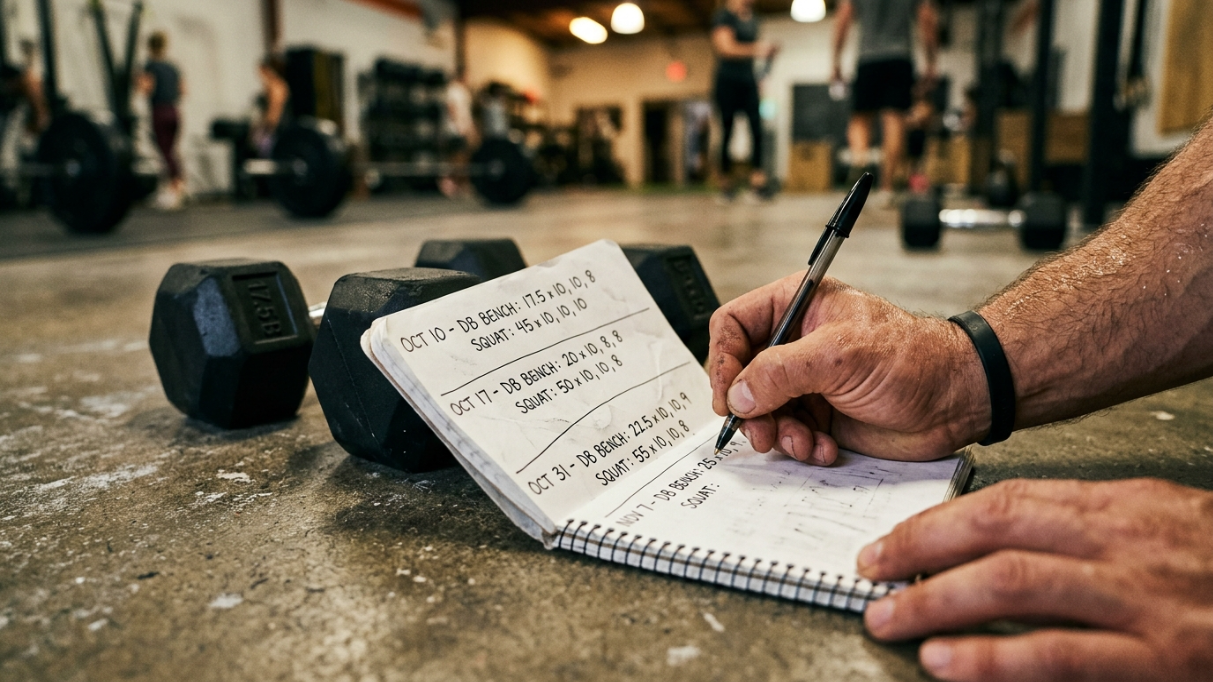
Tracking these small wins matters. A simple notebook works perfectly. I write the date, the weight I used, and how many reps I completed. Looking back at week one compared to week eight is genuinely motivating in a way that no program switch can replicate. You see real evidence that the boring, repetitive work actually moved the needle.
The Accountability Structure That Actually Works
Telling a friend you’ll work out rarely produces lasting accountability. They forget, life happens, and there’s no real consequence when you skip. The accountability structures that work are the ones with visible evidence and a personal stake.
Posting a simple workout log publicly, even just to a small Instagram or a Reddit community like r/loseit or r/fitness, creates a mild social commitment without the pressure of a dedicated accountability partner. Seeing your own posts streak across a week feels good. Breaking that streak feels bad enough to motivate action. That asymmetry is useful.
Paid commitments work even better. Booking a class you’ll lose money on if you cancel, or paying for a month of an app like Future or Caliber where a real coach checks your logs, creates stakes that matter. IMO, spending a small amount of money on accountability is one of the most cost-effective fitness investments a beginner can make, far more valuable than expensive equipment gathering dust in a corner.

FAQs
How do foolproof workout plans for indecisive beginners actually work?
They work by removing the need to make decisions during the workout itself. A foolproof plan pre-decides everything: days, exercises, sets, reps, and rest periods. When there’s nothing left to choose in the moment, the only thing left to do is show up and follow the structure. That simplicity is exactly what indecisive people need most.
How do I stop myself from switching to a new program every two weeks?
Set a hard commitment date before you start. Write it down. Tell someone. Give yourself permission to research new programs only after that date. Switching early always feels justified in the moment, but it consistently produces the same result: no real progress and another fresh start that leads nowhere different.
Do I need equipment to start a beginner workout plan?
No. A full-body bodyweight circuit requires nothing but floor space. Push-ups, squats, glute bridges, mountain climbers, and planks cover every major movement pattern. If you want to add resistance later, a set of adjustable dumbbells or a resistance band costs under $40 and handles most beginner strength needs for a year or more.
What if I pick the wrong workout plan?
There is no wrong plan for a beginner who has never trained consistently. Any structured program done consistently for eight weeks will produce results. The wrong plan is the one you never start, or the one you abandon at week two. Choosing imperfectly and following through beats choosing perfectly and quitting.
How do I track progress without obsessing over the scale?
Track performance metrics instead of body weight. Log how many reps you completed, how heavy you lifted, and how your energy felt after the session. Take photos every four weeks in the same lighting and clothing. These indicators show real change long before the scale reflects it, and they’re far less emotionally loaded.
Conclusion
Picking a plan and following it, even an imperfect one, will always outperform endlessly researching the ideal one. The indecision isn’t a character flaw, it’s just what happens when too many options meet too little experience, and the fix is simpler than most fitness content admits. What’s the longest you’ve ever stuck with one workout plan before switching?