Quick Fitness Plans for Arthritis Sufferers That Work
Nobody talks honestly about how hard quick fitness plans for arthritis sufferers are to find without wading through content clearly written by someone whose joints work fine. I watched my mother struggle with this for years, then started dealing with early-onset arthritis myself at 38. Moving hurts. Not moving hurts more. That cruel little paradox is exactly why the right plan matters so much, and why most generic workout advice completely misses the mark for people living with daily joint pain.
Why Most Fitness Advice Fails Arthritis Sufferers
Standard workout programs assume your body operates on a predictable schedule. Wake up, feel okay, train hard, recover overnight. Arthritis doesn’t follow that script.
Inflammation levels shift daily, sometimes hourly. A plan that worked perfectly on Tuesday might be completely off the table by Thursday morning. Most trainers don’t account for this because most trainers have never experienced it. They design linear programs with progressive overload baked in, which sounds great until a flare wipes out two weeks of momentum and leaves you starting over feeling defeated.
The other problem is intensity bias. Fitness culture glorifies pushing through discomfort. For arthritis sufferers, that advice can cause genuine joint damage. There’s a real difference between productive muscle fatigue and joint pain that signals harm. Learning that difference, and building a plan around it, is where most people need to start.
Joint protection isn’t a limitation. It’s a strategy.
What a Good Arthritis Fitness Plan Actually Looks Like
Forget the idea that a solid workout needs to be long, grueling, or sweat-soaked to count. For arthritis management, consistency over intensity wins every time. A 20-minute session done four days a week beats an hour-long session done once before pain sidelines you for five days.
The best plans for arthritis include three things: range-of-motion work to maintain flexibility, low-impact strength training to support joints, and aerobic movement that keeps cardiovascular health up without grinding cartilage down. None of these need to happen in the same session. Spreading them across the week based on how your body feels each day is smarter than following a rigid schedule.
I also learned to stop thinking of rest days as failure. Rest is part of the plan. On high-inflammation days, gentle movement like a slow walk around the block still counts. It keeps blood flowing to the joints, which actually helps reduce stiffness faster than complete inactivity does.
Quick Fitness Plans for Arthritis Sufferers: The Weekly Framework
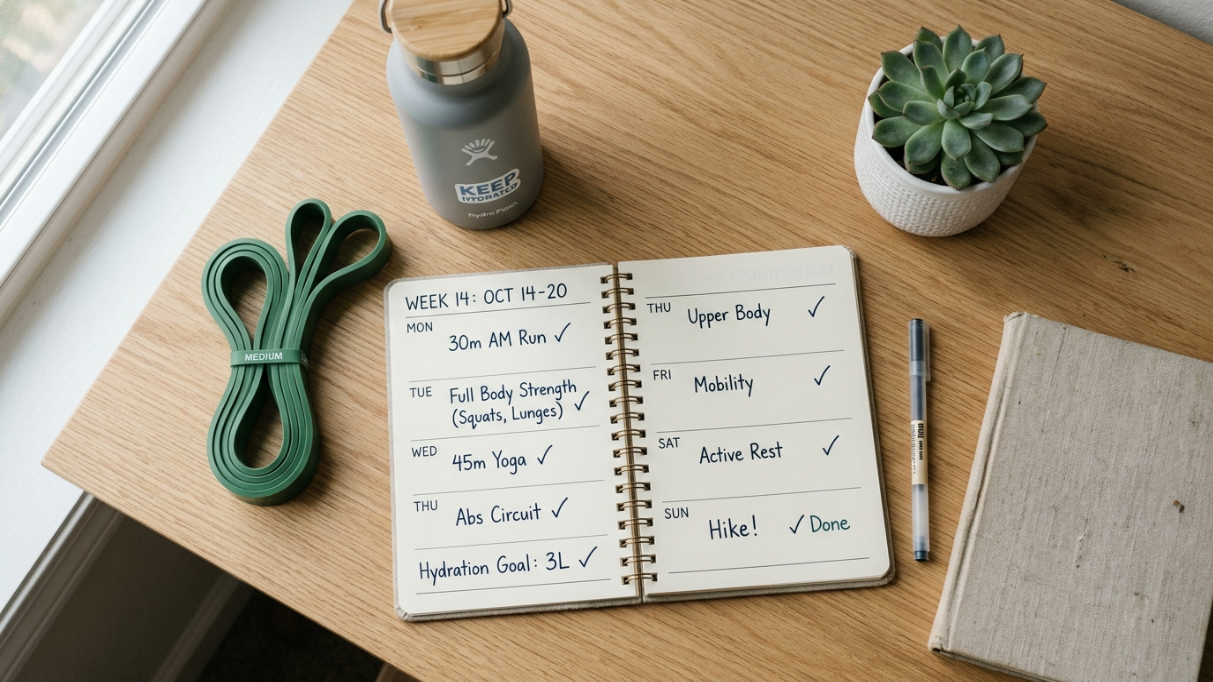
Here’s the actual structure I use and recommend. It’s flexible by design, because flexibility isn’t just a physical skill when you have arthritis, it’s a scheduling necessity.
The 4-Day Rotation
Day one focuses on upper body strength using resistance bands. Bands are gentler on joints than free weights because they create variable resistance, meaning less strain at the joint’s most vulnerable angle. I use TheraBand resistance bands, the medium and heavy resistance options. Exercises include seated rows, banded chest presses, and overhead pulls, all done seated or standing with full control.
Day two is water-based cardio or a 25-minute walk. Swimming laps or water aerobics classes reduce joint load by up to 75 percent compared to land-based exercise. If a pool isn’t accessible, a flat-surface walk at a comfortable pace works well. The goal is heart rate elevation, not speed.
Day three is a rest or gentle yoga day. I follow along with Yoga With Adriene on YouTube. Her “yoga for joint pain” and “gentle morning yoga” videos are genuinely thoughtful about modification. Nothing is forced. Everything has an easier option.
Day four hits lower body strength. Chair squats, clamshells with a light resistance band, seated leg extensions, and wall sits at shallow angles. All of these build the muscle surrounding the knees and hips without loading the joints directly. Strong muscles around a compromised joint reduce pain significantly over time.
Also Read: Simple Workout Routines for Gluten Intolerant People 2026
Morning Stiffness Routines That Actually Help
Morning is often the hardest time for arthritis sufferers. That first 20 to 45 minutes after waking, where your joints feel like they’ve been packed in cement overnight, can set the tone for the whole day. Getting ahead of it matters.
I spend 10 minutes in bed before even standing up. Gentle ankle circles, knee lifts, hip rotations lying flat, and slow wrist rolls all done while still horizontal. This gets synovial fluid moving through the joints before any weight-bearing happens. It sounds almost too simple to work. It genuinely helps.
Once standing, I do a short warm-up routine before anything else:
- Shoulder rolls, 10 forward and 10 backward
- Gentle neck side-to-side stretches, 5 per side
- Hip circles standing in place, 10 per direction
- Calf raises on a flat surface, 15 slow repetitions
- Seated forward fold in a chair, holding 20 seconds
This whole sequence takes 8 minutes. On days when a full workout isn’t possible, this alone counts as movement and keeps the joints from locking up further.

Low-Impact Strength Training Without Wrecking Your Joints
Strength training with arthritis gets a bad reputation, and it’s mostly undeserved. The research is pretty clear that building muscle around arthritic joints reduces pain, improves stability, and slows functional decline. The key is choosing the right exercises and the right load.
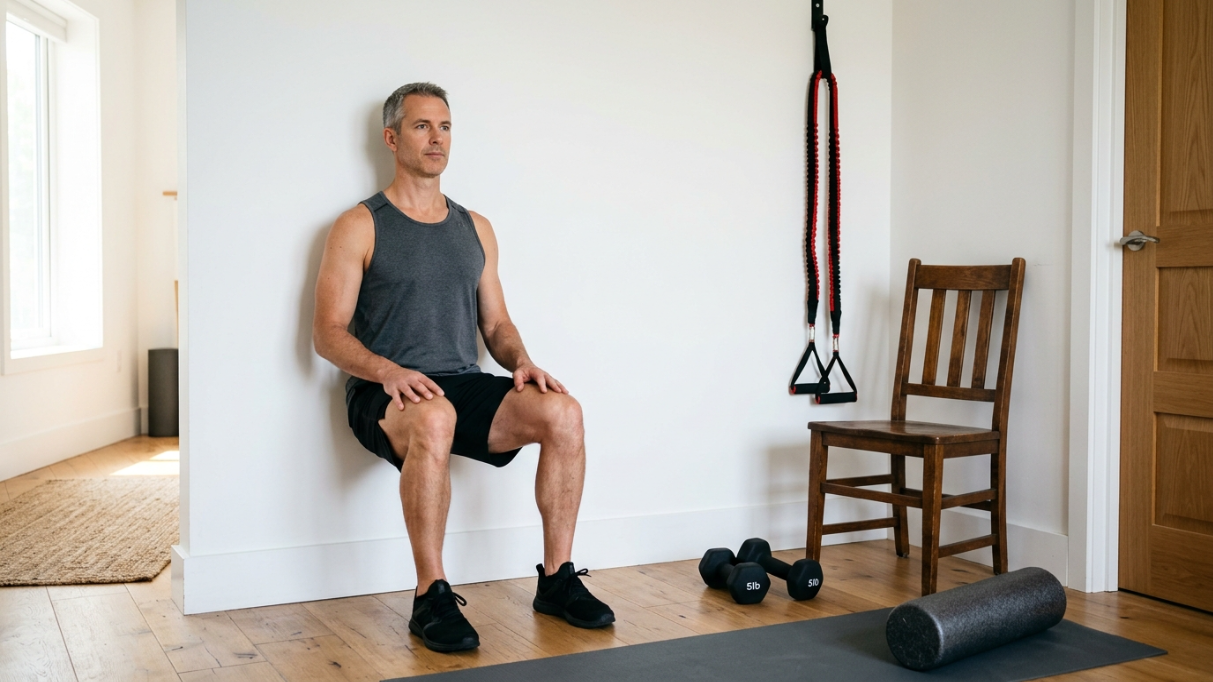
Isometric holds are underrated for arthritis. A wall sit, a static bicep hold with a light dumbbell, or pressing your palms together for a chest isometric builds strength without moving through a painful range of motion. These are great for days when movement hurts but complete rest feels wrong.
For dynamic exercises, I stick to partial range of motion on bad days. Instead of a full squat, I do a quarter squat. Instead of a full push-up, I do a wall push-up. The muscle still works. The joint doesn’t get pushed into its painful range. Over weeks and months, that partial range often expands naturally as strength and flexibility improve.
Equipment worth having at home: a set of light to medium dumbbells (3 to 10 pounds depending on your strength level), a long resistance band, a foam roller for post-session tissue work, and a sturdy chair for supported exercises. You can build a genuinely effective home gym for under $80 with these four things.
Tracking Pain and Progress the Smart Way
One mistake I made early on was tracking only fitness metrics. Reps, sets, steps, time. What I wasn’t tracking was how my joints felt before, during, and after each session. That data turned out to be far more valuable.
I started keeping a simple pain and energy log using the notes app on my phone. Before each session I rate my joint pain on a scale of 1 to 10 and note which joints are most affected. After each session I log how the workout felt and whether symptoms improved, stayed the same, or worsened. Within six weeks, clear patterns emerged.
I noticed my knees were consistently worse after any workout I did on less than seven hours of sleep. I noticed water-based cardio never made my symptoms worse, while running always did. These aren’t things any generic fitness plan could have told me. They came from paying attention to my own body with some structure around the observation.
FYI, this kind of logging takes less than two minutes per day and gives you genuinely useful information to adjust your plan with real evidence instead of guesswork.

When to Pull Back and When to Push Through
This is the question that trips up almost everyone following quick fitness plans for arthritis sufferers. There’s no universal answer, but there are useful guidelines.
Pull back immediately if you experience sharp, stabbing joint pain during movement. That’s a signal to stop, not push through. Also pull back if swelling increases during or after a workout, if you notice reduced range of motion that wasn’t there before the session, or if pain lasts more than two hours after exercise ends.
It’s generally okay to continue with mild to moderate joint discomfort that doesn’t worsen as you warm up. Muscle soreness from effort is normal and not a warning sign. Fatigue during a session is expected. These aren’t reasons to stop.
IMO, the smartest approach is treating each workout as a check-in with your body rather than a performance to complete. Some days you’ll finish stronger than expected. Other days you’ll cut the session short. Both outcomes are valid when you’re managing a chronic condition.
FAQs
What are the safest quick fitness plans for arthritis sufferers to start with?
Water aerobics, chair-based strength circuits, and resistance band routines are the safest starting points. They reduce joint load while still building strength and improving cardiovascular health. Start with two sessions per week, keep each one under 25 minutes, and increase duration before intensity. Give your body at least two weeks to adjust before adding more.
Can exercise actually reduce arthritis pain long-term?
Yes, and the evidence behind this is strong. Regular low-impact movement improves joint lubrication, strengthens the muscles that support affected joints, and reduces systemic inflammation over time. Most people with arthritis report measurable pain reduction after six to eight weeks of consistent gentle exercise. Complete rest tends to worsen stiffness and pain rather than help it.
How do I know if I’m overdoing it during a workout?
Sharp pain during movement, swelling during or after exercise, and pain that lingers beyond two hours post-workout are the clearest signals you’ve pushed too far. Mild muscle fatigue and general tiredness are normal. When in doubt, reduce the intensity or switch to a gentler option for that session rather than stopping altogether.
Is yoga actually useful for people with arthritis?
Genuinely useful, yes. Yoga improves flexibility, builds supporting muscle, and reduces stress, which directly lowers inflammatory markers. The key is finding beginner or therapeutic-level classes that emphasize modification. Yoga With Adriene on YouTube and the Glo platform both offer arthritis-friendly sessions. Avoid hot yoga, which can increase inflammation for some people.
Should I exercise on days when my arthritis flares up badly?
On severe flare days, intense exercise is a hard no. But gentle movement, like a slow 10-minute walk, bed-based joint rotations, or simple stretching, usually helps reduce stiffness without worsening the flare. The goal on those days isn’t fitness, it’s keeping fluid moving through the joints and maintaining basic mobility until the flare subsides.
Conclusion
Living with arthritis doesn’t mean giving up on fitness. It means getting smarter about it, and building plans that actually account for the way your body works on the hard days, not just the good ones. The routines here aren’t about ignoring pain, they’re about moving thoughtfully inside it. What movement has helped your joints the most on painful days?